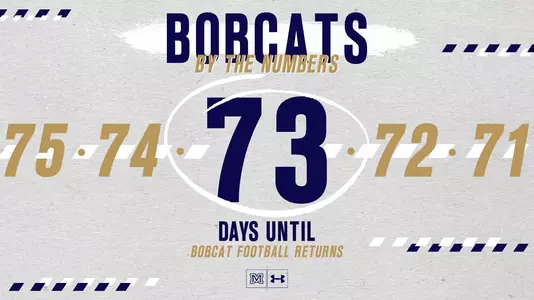
BOBCATS BY THE NUMBERS: 73 Days Until Kickoff and a Look at Old Gatton Field
6/19/2019 2:00:00 PM | Football
Montana State won 73 games against college competition after an emotional Dedication on October 4, 1930
June 19: In addition to a quick look at players wearing the jersey number corresponding to the number of days remaining until Montana State's season opener at Texas Tech on August 31, Bobcats by the Numbers brings you another tidbit or two aligning with that number.
#73
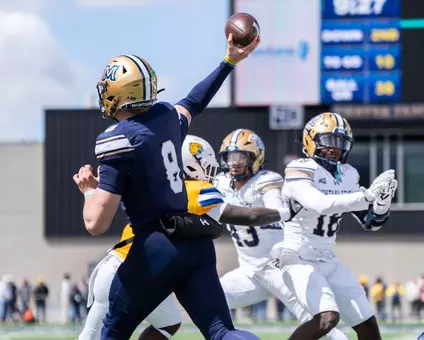
Ryan Barkley, OL: Ryan Barkley brings a physical presence to the Bobcat offensive line. He redshirted last season after a fine career at Durango, Colorado, High.
73 – Victories against college competition by the Bobcats at the permanent Gatton Field following the dedication win in 1930.
After the death of popular sports hero Cy Gatton in the last days of World War I, Montana State played its home games on iterations of Gatton Field different than what we think of today. After the program resumed in 1919 Montana State played most of its home games at College Field at the approximate site of current Langford and Culbertson Halls. That field became Gatton Field from 1920-22, and in 1923 when the football field was moved south and east, closer to 8th Street, that field too became known as Gatton Field. The seating of just under 2,000 was on wooden bleachers, with seating more than doubled for the 1923 Cat-Griz game. That was the last meeting between the two schools in Bozeman until 1953. The year before that Montana State had opened its beautiful new gymnasium, and immediately many on campus and in the community began agitating for a new, permanent football field. Part of the problem with all previous on-campus football fields was the drainage, as any precipitation turned the dirt-and-native-grass playing surfaces into what was frequently described as an "ankle deep" quagmire of mud. The 1930 Bobcats, the first team to call Gatton Field home, played just two games there, and two to three home games were the norm throughout 1950. Truncated home schedules owed partly to shorter seasons (eight or nine games), and partly to the regularity of neutral site games. In addition to playing the Grizzlies in Butte every season from 1926 to 1949, the Bobcats regularly moved home games to Billings and Great Falls, and occasionally Butte. The Bobcats offered home fans few memorable moments in the 1930s and few moments at all in the 1940s due to a four-year pause due to World War II. Tony Storti arrived as head coach in 1952, though, and things began humming. The Cats won two of their three home games that season, two out of five in '53, but in 1954 Storti's men won all five of their Gatton Field dates. With Wally Lemm at the helm in 1955 was 2-2 at home, but the 1956 National Championship season began a string of four years and 16 straight games with nothing but wins at Gatton Field. In fact, from 1956 through the 1964 season the Bobcats were 33-4-1 at home. As good as Montana State was during its final 15 years in Gatton Field, it's doubtful that a more talented team ever played there than West Texas State (now A&M) in 1968. Led by future NFL star Mercury Morris, who rushed for 340 yards on 35 carries that day, the Buffaloes beat the Cats 35-20. Morris' blocking back was another future NFL star, Duane Thomas, who carried only twice that day. (This report relied on information compiled from the MSC Exponent, The Montanan annuals, and Tom Donovan's excellent book Montana's Greatest Rivalry, A College Football Classic.)
Chronology: Hal Walker (1956), Chuck Dallum (1957), Fred Turner (1960-61), Dick Hueth (1964), Charlie Moore (1965), Ron East (1966), John Winchell (1967-68), Ernie Lewis (1969), Ernie Lewis (1970), Wayne Hammond (1971-74), Mike Peavey (1975), Scott Keyser (1976), Les Sherrill (1977-79), Tim Dietz (1980), Bruce Randall (1982-84), Tom Burgraff (1986), Mike Sain (1987), Jim Montgomery (1990), Jason Westbrock (1993-95), Dener Stairs (1996-97), Chris MacNiell (1999), Mike Schmidt (2000-01), Joe Hirst (1992-2006), Alex Terrien (2007-08), Killian Fitzpatrick (2009-10), Tyler Blomstrom (2012), Caleb Gillis (2013-17), Ryan Barkley (2018-)
#73 Notes: Ron East's college football career didn't have much of a shelf life remaining when he arrived at Montana State in the fall of 1966, but he got a lot done in a short amount of time. In his one season as a Bobcat, East earned First Team All-Big Sky honors in football. He also won the Big Sky javelin championship. His path to MSU was not direct. The Portland native began his career at Oregon State, but after it was made clear that he was not in the Beavers' future plans he joined the Marine Forces Reserves. Shortly thereafter he moved on to Columbia Basin College in Washington, earning all-conference honors twice and helping his team to an undefeated season and NWAC title. He is in both the NWAC and Bobcat Athletics Hall of Fame, and played for the Cowboys, San Diego Chargers, Cleveland Browns, Atlanta Falcons and Seattle Seahawks.
#73
Ryan Barkley, OL: Ryan Barkley brings a physical presence to the Bobcat offensive line. He redshirted last season after a fine career at Durango, Colorado, High.
73 – Victories against college competition by the Bobcats at the permanent Gatton Field following the dedication win in 1930.
After the death of popular sports hero Cy Gatton in the last days of World War I, Montana State played its home games on iterations of Gatton Field different than what we think of today. After the program resumed in 1919 Montana State played most of its home games at College Field at the approximate site of current Langford and Culbertson Halls. That field became Gatton Field from 1920-22, and in 1923 when the football field was moved south and east, closer to 8th Street, that field too became known as Gatton Field. The seating of just under 2,000 was on wooden bleachers, with seating more than doubled for the 1923 Cat-Griz game. That was the last meeting between the two schools in Bozeman until 1953. The year before that Montana State had opened its beautiful new gymnasium, and immediately many on campus and in the community began agitating for a new, permanent football field. Part of the problem with all previous on-campus football fields was the drainage, as any precipitation turned the dirt-and-native-grass playing surfaces into what was frequently described as an "ankle deep" quagmire of mud. The 1930 Bobcats, the first team to call Gatton Field home, played just two games there, and two to three home games were the norm throughout 1950. Truncated home schedules owed partly to shorter seasons (eight or nine games), and partly to the regularity of neutral site games. In addition to playing the Grizzlies in Butte every season from 1926 to 1949, the Bobcats regularly moved home games to Billings and Great Falls, and occasionally Butte. The Bobcats offered home fans few memorable moments in the 1930s and few moments at all in the 1940s due to a four-year pause due to World War II. Tony Storti arrived as head coach in 1952, though, and things began humming. The Cats won two of their three home games that season, two out of five in '53, but in 1954 Storti's men won all five of their Gatton Field dates. With Wally Lemm at the helm in 1955 was 2-2 at home, but the 1956 National Championship season began a string of four years and 16 straight games with nothing but wins at Gatton Field. In fact, from 1956 through the 1964 season the Bobcats were 33-4-1 at home. As good as Montana State was during its final 15 years in Gatton Field, it's doubtful that a more talented team ever played there than West Texas State (now A&M) in 1968. Led by future NFL star Mercury Morris, who rushed for 340 yards on 35 carries that day, the Buffaloes beat the Cats 35-20. Morris' blocking back was another future NFL star, Duane Thomas, who carried only twice that day. (This report relied on information compiled from the MSC Exponent, The Montanan annuals, and Tom Donovan's excellent book Montana's Greatest Rivalry, A College Football Classic.)
Chronology: Hal Walker (1956), Chuck Dallum (1957), Fred Turner (1960-61), Dick Hueth (1964), Charlie Moore (1965), Ron East (1966), John Winchell (1967-68), Ernie Lewis (1969), Ernie Lewis (1970), Wayne Hammond (1971-74), Mike Peavey (1975), Scott Keyser (1976), Les Sherrill (1977-79), Tim Dietz (1980), Bruce Randall (1982-84), Tom Burgraff (1986), Mike Sain (1987), Jim Montgomery (1990), Jason Westbrock (1993-95), Dener Stairs (1996-97), Chris MacNiell (1999), Mike Schmidt (2000-01), Joe Hirst (1992-2006), Alex Terrien (2007-08), Killian Fitzpatrick (2009-10), Tyler Blomstrom (2012), Caleb Gillis (2013-17), Ryan Barkley (2018-)
#73 Notes: Ron East's college football career didn't have much of a shelf life remaining when he arrived at Montana State in the fall of 1966, but he got a lot done in a short amount of time. In his one season as a Bobcat, East earned First Team All-Big Sky honors in football. He also won the Big Sky javelin championship. His path to MSU was not direct. The Portland native began his career at Oregon State, but after it was made clear that he was not in the Beavers' future plans he joined the Marine Forces Reserves. Shortly thereafter he moved on to Columbia Basin College in Washington, earning all-conference honors twice and helping his team to an undefeated season and NWAC title. He is in both the NWAC and Bobcat Athletics Hall of Fame, and played for the Cowboys, San Diego Chargers, Cleveland Browns, Atlanta Falcons and Seattle Seahawks.
Players Mentioned

OL
/ Football
OL
/ FootballLeon Costello Press Conference: Kennedy-Stark Athletic Center
Thursday, July 31
A Conversation with President Dr. Waded Cruzado | Montana State Athletics
Monday, May 19
Big Cats, Little Trucks - Willie Patterson
Wednesday, May 03
Matt Houk Introductory Press Conference
Wednesday, May 03