Bobcat History Lesson - Portland State
10/14/2004 12:00:00 AM | Football
Portland State University has built a national reputation on its ability to generate practical, community-based knowledge and theories that apply to business. Its location in downtown Portland suits PSU perfectly for this pursuit.
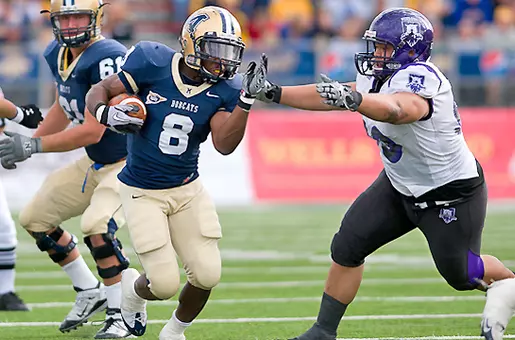
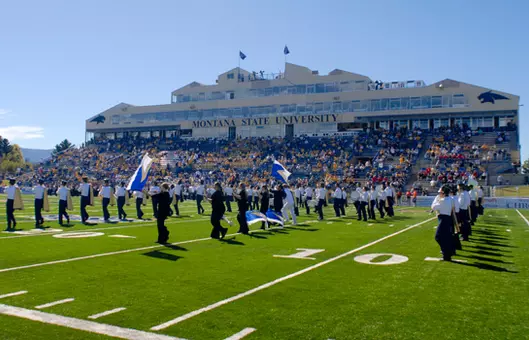
That, however, is not Portland State's primary claim to fame. No number of professors hatching business management theories or scientists cooking up schemes in laboratories could bring as much national acclaim to the university as famous quarterbacks and successful coaches, and Portland State has had more than its share of both. In fact, PSU has the singular distinction of having changed the college football landscape with its offensive firepower and star-producing penchant. And it all began on a sunny autumn afternoon in Bozeman, nearly 30 years ago.
Led by a rookie coach nicknamed after a rodent and a transfer quarterback, Mouse Davis' Vikings came to Bozeman as an unknown entity. Montana State was fresh off three straight winning seasons, more than Portland State had produced in the preceding decade, and Sonny Holland's team used its trademark strengths -- a ball-control offense and suffocating defense. But on that beautiful fall day, it was all about the offense.
The Bobcats blocked a punt for a touchdown to light the scoreboard first, but shortly thereafter Mouse Davis unleashed his vaunted Run-and-Shoot offense on the college football world. Early in the second quarter, Portland State converted a fourth-and-goal from the one for a 7-6 lead, then scored on two of their next three possessions for a 21-6 halftime cushion. The Vikings moved the ball on the initial possession of the second half, but a fumbled punt snap set up a Steve Kracher halfback pass for a score. The race to the end zone was on.
Mike Gardner started at quarterback that day for Portland State, but a future star was waiting in the wings. June Jones, the current head coach at Hawaii and a future professional star, threw his first pass as a Viking midway through the third quarter, a 79-yard touchdown pass to Tony Stoudamire. Pat Bolton's field goal brought the Bobcats within 28-23, but Jones led the Vikings on an 82-yard touchdown drive for a 34-23 lead.
With Mike Holder at the reins of the Bobcat offense, Steve Kracher capped a 71-yard drive on a four-yard touchdown run. Portland State was again on the move when Dan Ueland intercepted a June Jones pass deep in MSU territory and returned it to the Bobcat 26. With new life, Holder moved the 'Cats to midfield, then found Len Kelly on a 38-yard pass to the Viking one. Holder did the honors himself for a 35-34 Bobcat lead with less than two minutes left. Jones took over at his own 20, and missed an open Stoudamire twice. On fourth-and-10, he again threw incomplete, and Holder iced the Bobcat win by kneeling twice.
Montana State had scored 35 points, a high total for any Sonny Holland-coached team, and the most it would score that season. Those points came in typical Bobcat fashion, though, two set up by special teams turnovers and the game-winner by an interception. The Vikings vaunted new offense became the scourge of the west, as PSU scored at least 30 points in eight of their 11 games.
Great things lied in each program's future. Under Mouse Davis and later Pokey Allen, Portland State became a western power in small-college football. In the last 29 years, the Vikings have posted 20 winning records.
The Bobcats lost four of their next five games after beating PSU, but closed 1975 with a 5-5 record, using that strong finish as a springboard to the 1976 National Championship. The two traditional Division II powers would meet only three more times between 1975 and 1995, but in 1996 the Vikings joined MSU in the Big Sky Conference. The annual meeting between these old rivals is a season highlight for both, but it's been a tough act to live up to the awesome display put on by both teams on that spectacular afternoon in 1975.
(Catch this and every Bobcat History Lesson on the Bobcat Radio Network in Kris Atteberry's pre-game show, beginning one hour before kickoff. Atteberry's recitation is always worth it...)
That, however, is not Portland State's primary claim to fame. No number of professors hatching business management theories or scientists cooking up schemes in laboratories could bring as much national acclaim to the university as famous quarterbacks and successful coaches, and Portland State has had more than its share of both. In fact, PSU has the singular distinction of having changed the college football landscape with its offensive firepower and star-producing penchant. And it all began on a sunny autumn afternoon in Bozeman, nearly 30 years ago.
Led by a rookie coach nicknamed after a rodent and a transfer quarterback, Mouse Davis' Vikings came to Bozeman as an unknown entity. Montana State was fresh off three straight winning seasons, more than Portland State had produced in the preceding decade, and Sonny Holland's team used its trademark strengths -- a ball-control offense and suffocating defense. But on that beautiful fall day, it was all about the offense.
The Bobcats blocked a punt for a touchdown to light the scoreboard first, but shortly thereafter Mouse Davis unleashed his vaunted Run-and-Shoot offense on the college football world. Early in the second quarter, Portland State converted a fourth-and-goal from the one for a 7-6 lead, then scored on two of their next three possessions for a 21-6 halftime cushion. The Vikings moved the ball on the initial possession of the second half, but a fumbled punt snap set up a Steve Kracher halfback pass for a score. The race to the end zone was on.
Mike Gardner started at quarterback that day for Portland State, but a future star was waiting in the wings. June Jones, the current head coach at Hawaii and a future professional star, threw his first pass as a Viking midway through the third quarter, a 79-yard touchdown pass to Tony Stoudamire. Pat Bolton's field goal brought the Bobcats within 28-23, but Jones led the Vikings on an 82-yard touchdown drive for a 34-23 lead.
With Mike Holder at the reins of the Bobcat offense, Steve Kracher capped a 71-yard drive on a four-yard touchdown run. Portland State was again on the move when Dan Ueland intercepted a June Jones pass deep in MSU territory and returned it to the Bobcat 26. With new life, Holder moved the 'Cats to midfield, then found Len Kelly on a 38-yard pass to the Viking one. Holder did the honors himself for a 35-34 Bobcat lead with less than two minutes left. Jones took over at his own 20, and missed an open Stoudamire twice. On fourth-and-10, he again threw incomplete, and Holder iced the Bobcat win by kneeling twice.
Montana State had scored 35 points, a high total for any Sonny Holland-coached team, and the most it would score that season. Those points came in typical Bobcat fashion, though, two set up by special teams turnovers and the game-winner by an interception. The Vikings vaunted new offense became the scourge of the west, as PSU scored at least 30 points in eight of their 11 games.
Great things lied in each program's future. Under Mouse Davis and later Pokey Allen, Portland State became a western power in small-college football. In the last 29 years, the Vikings have posted 20 winning records.
The Bobcats lost four of their next five games after beating PSU, but closed 1975 with a 5-5 record, using that strong finish as a springboard to the 1976 National Championship. The two traditional Division II powers would meet only three more times between 1975 and 1995, but in 1996 the Vikings joined MSU in the Big Sky Conference. The annual meeting between these old rivals is a season highlight for both, but it's been a tough act to live up to the awesome display put on by both teams on that spectacular afternoon in 1975.
(Catch this and every Bobcat History Lesson on the Bobcat Radio Network in Kris Atteberry's pre-game show, beginning one hour before kickoff. Atteberry's recitation is always worth it...)
Wednesday, June 10
Friday, March 27
Monday, March 23
Friday, March 13